Word entry
Open the word entryMay spoil a puzzle
filth meaning
Filth is dirt at its worst: foul, heavy grime that has piled up or been left alone. In a second sense, it is material that a speaker considers offensive or obscene. Both halves of the filth meaning carry an attitude. People rarely use the word for a little dust on a shelf. They use it when they want the listener to feel some of their disgust. In the figurative sense, the word says more about the speaker's opinion than about the thing being described.
Filth Meaning in Literal and Figurative Uses
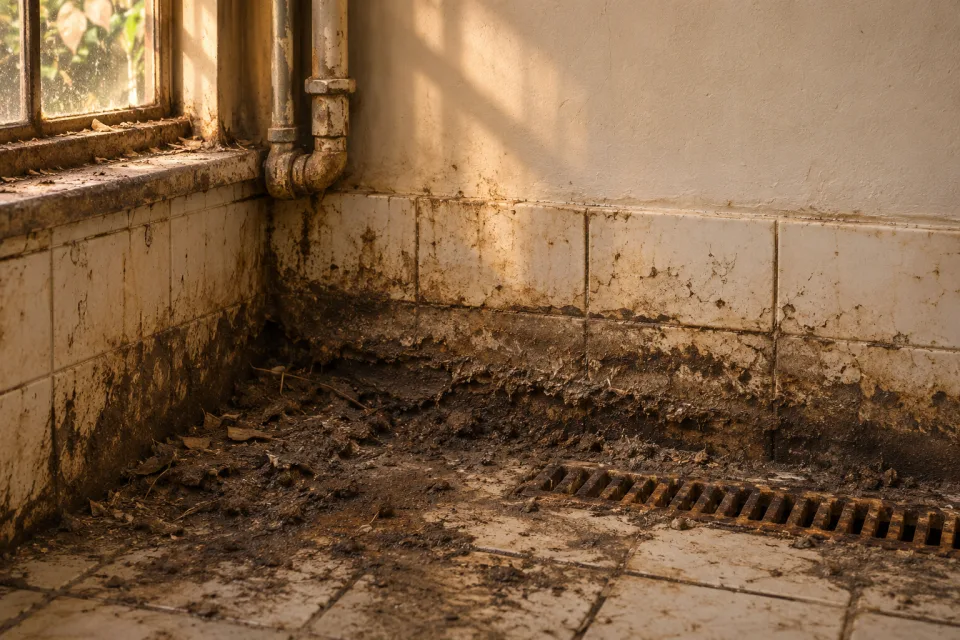
The literal sense is physical. Examples include mud tracked across a tiled floor and left to dry around a drain grate, grease caked on a stovetop nobody has touched in months, and the dark crust in the corners of an abandoned bus shelter. Two features usually appear together. There is a lot of it, and it got that way through buildup or neglect. One muddy footprint is just dirt. A hallway where the mud has dried in layers along the floor and around the grate is much closer to filth.
The extended sense covers material someone finds offensive, usually because it seems obscene, crude or degrading. People apply it to movies, jokes, magazines, websites, song lyrics and speech. In this use the word works as a verdict. If someone calls a comedy special filth, they are telling you how they judge it, not describing a fact about the special that everyone would agree on. Another viewer might call the same material sharp, honest or just silly. When you read the figurative filth meaning in an article or hear it in conversation, it tells you where the speaker stands. When you use it yourself, listeners will hear it as your judgment rather than a neutral description.
Filth sounds forceful when the speaker could have said dirt, mess or bad and chose the stronger word instead. That choice is the signal. It hits especially hard when it's aimed at something people made, like a book, a show or a joke, because it rejects the work outright instead of criticizing a part of it. A short exclamation adds force too: "That's filth." The word can also be playful exaggeration. A parent who calls the back seat of the family car a pit of filth over a few cracker crumbs is joking, and everyone in the car knows it. Context and tone decide how strong it lands.
Grammar: Using Filth in a Sentence
Filth is usually an uncountable noun. You normally don't say "a filth" or "filths." To talk about an amount, you put a measuring word in front: a layer of filth, a film of filth, years of filth. Common patterns include covered in filth, caked with filth, thick with filth, full of filth, and the filth under the sink or behind the fridge.
The usual adjective is filthy, and the filthy meaning follows the noun. With physical things it means very dirty: filthy boots, a filthy oven, filthy hands after an afternoon fixing a bike chain. With words, jokes or pictures it means obscene or offensive: a filthy limerick, a filthy rumor. Sometimes the adjective reads more smoothly than the noun. "The garage was filthy" and "The garage was full of filth" mean much the same thing. The first describes the garage, and the second points at the stuff in it.
Filth vs Dirt vs Grime
Dirt is the broad, everyday word. In American English it can mean garden soil, dust on a windowsill or any unclean matter at all. It can be mild or serious, and it doesn't push the listener toward disgust. A kid playing in the dirt is a normal sight.
Grime is dirt that has built up on a surface over time, usually a film or crust. Think of the gray layer on a computer keyboard, the dark lines in old grout or the haze on a bus window. The word focuses on the buildup more than on how the speaker feels about it.
Filth adds emphatic disgust. It may include grime, mud or worse, but the word's job is to say that the condition is repulsive, not just unclean. These lines are flexible. The same neglected kitchen could be called dirty, grimy or filthy depending on how strongly the speaker reacts and how much they want to dramatize it. In figurative use the words split further. Dirt can mean damaging information, as in "digging up dirt" on a rival. Grime rarely takes a figurative sense. Filth is the one that labels content as offensive.
How to Pronounce Filth
Filth has one syllable. It starts like the word fill and ends with the unvoiced TH heard in thin, not the voiced TH in this. Say fill, keep the L, then slide the tip of your tongue forward until it lightly touches the edge of your upper front teeth, and push air out without using your voice. If you rest a hand on your throat, the final sound should not buzz.
If it comes out as "filt," the tongue stopped behind the teeth and made a T. If it comes out as "filf," the lips took over from the tongue. Practicing the pair fill and filth, then thin and filth, helps the tongue find the right spot.
In use
After the basement flooded, the bottom shelf sat under a layer of filth that smelled worse than it looked.
The kids came home from the creek covered in filth, and their sneakers spent the night on the back porch.
The exhaust hood over the diner grill was thick with years of filth.
Some parents at the board meeting called the novel filth, while the librarians who picked it described it as a serious book about war.
My uncle calls every dating show on TV filth, yet somehow he knows all the contestants by name.